A stock market simulator is the safest way to learn how investing works — you practice with virtual money on real market data, so you can make every beginner mistake without losing a cent. This guide explains what a simulator is, how it works, and how to choose the right stock market game for you.
What is a stock market simulator?
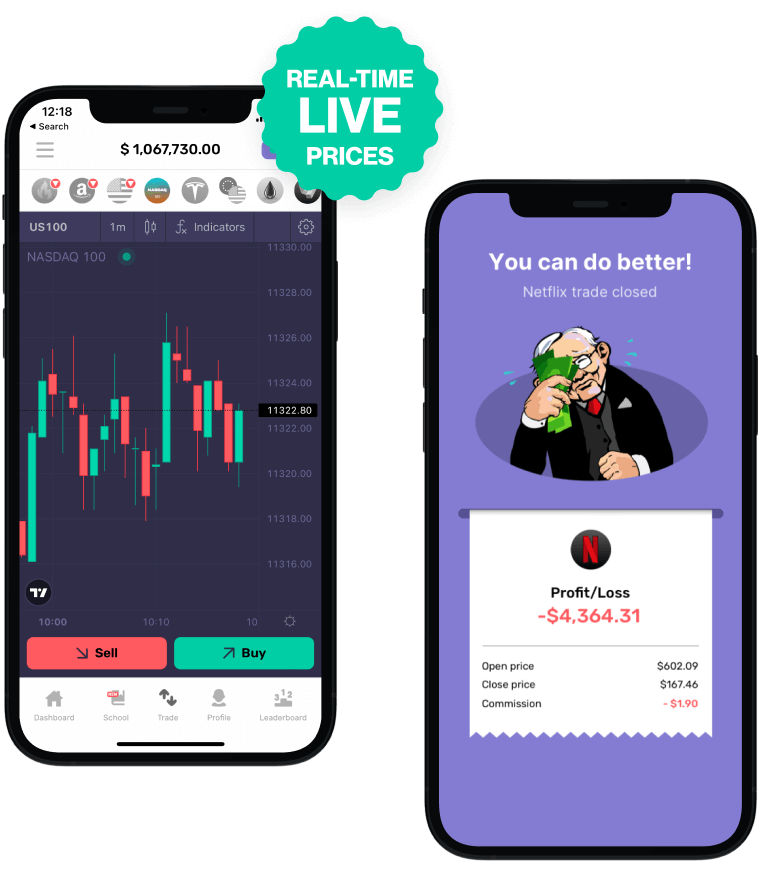
A stock market simulator (sometimes called a stock market game or paper-trading app) is a platform that lets you trade stocks, and often other assets, using a virtual balance. Prices track the real market, but the money is fake — so you get an authentic feel for how buying, selling, and holding positions plays out, with zero financial risk.
How does virtual trading work?
When you place a trade in a simulator, the platform records it at the current (or recent) market price and updates your virtual portfolio just like a real brokerage would. You can watch positions gain or lose value, track your total return, and review what worked. The best simulators add:
- Real-time or near-real-time data for realistic practice.
- Portfolio tracking so you can see performance over time.
- Multiple asset types — stocks, ETFs, forex, crypto, and more.
- Lessons and quizzes that teach the "why" behind each move.
Why beginners use a stock market game
Learning to invest with real money is expensive when you're just starting out. A simulator removes that risk so you can focus on the fundamentals:
- Understand how orders and prices actually behave.
- Test a strategy across weeks or months before committing real cash.
- Learn to manage a diversified portfolio.
- Build the discipline and habits that separate good investors from gamblers.
What do people actually do once the money is virtual? We looked at 800,000 trades made in our own simulator and wrote up the results in what people do with $100,000 of fake money. Most players made money, but fewer than one in five did better than simply buying an index fund.
If you're brand new, start with our companion guides on the best stock market simulator game for PC or how to play a stock market simulator online, or jump straight into the Three Investeers simulator.
What to look for in a stock market simulator
Not all simulators are equal. When comparing options, weigh these factors:
- Data quality: real-time beats delayed data for realistic practice.
- Ease of use: a clean interface keeps beginners from getting overwhelmed.
- Learning tools: lessons, quizzes, and guidance accelerate progress.
- Cross-device access: practice on PC and continue on mobile.
- Cost: the best options are free to start.
For a hands-on comparison of the top options, see our roundup of the best stock market simulator apps, and our detailed Investopedia Simulator review if you're considering that classic option. Teachers and students can find classroom-friendly picks in our guide to the best stock market simulators for students.